¡Qué grande ha estado esta semana la cadena de noticias con sede en Atlanta! Tres por el precio de uno, y es que por las noches, entre zapping y zapping, me he encontrado durante tres días con la emisión de tres conferencias en directo de figuras tan importantes y modelos para la humanidad como Mugabe (ayer miércoles) y Ahmadineyad. De este último han emitido tanto la charla en la ONU (martes noche) como la Universidad de Columbia (lunes noche).
Sublime.
PD: es la única televisión en inglés que pillo en mi actual casa y aún no tengo internet. Qué remedio...
Mostrando entradas con la etiqueta Medios de comunicación. Mostrar todas las entradas
Mostrando entradas con la etiqueta Medios de comunicación. Mostrar todas las entradas
jueves, 27 de septiembre de 2007

viernes, 14 de septiembre de 2007
La gran duda
Llevaba yo bastante tiempo pensando en escribir este artículo, y es que hay una gran pregunta y confusión que me ronda por la cabeza. Verán, como seguramente sabrán durante los pasados tres años tanto desde el Gobierno de España como desde la mayoría de los medios de comunicación se nos ha intentado vender la idea de que los etarras eran buenos. Todo fuera por el bien del proceso. ¿Y ahora? ¿Qué se supone que debemos pensar ahora? ¿Son buenos o malos? La verdad es que yo estoy hecho un lío.
Es probable que conozcan la respuesta, y es que esta es bien sencilla. No debemos pensar nada, serán buenos o malos dependiendo de lo que interese en cada momento y, además, no tendrán nigún reparo en insistir que ellos siempre han defendido esa postura. No alberguen la menor duda de que el señor Presidente aparecerá descrito como un gran luchador contra el terrorismo que siempre mantuvo firme su postura beligerante contra él, si es eso lo que conviene en ese momento. Otra cuestión es que se pueda afirmar que estos tienen un rostro de dureza diamantina. Pero esto no sería nada nuevo...
Es probable que conozcan la respuesta, y es que esta es bien sencilla. No debemos pensar nada, serán buenos o malos dependiendo de lo que interese en cada momento y, además, no tendrán nigún reparo en insistir que ellos siempre han defendido esa postura. No alberguen la menor duda de que el señor Presidente aparecerá descrito como un gran luchador contra el terrorismo que siempre mantuvo firme su postura beligerante contra él, si es eso lo que conviene en ese momento. Otra cuestión es que se pueda afirmar que estos tienen un rostro de dureza diamantina. Pero esto no sería nada nuevo...
lunes, 25 de junio de 2007
Las televisiones
Es duro, en un país supuestamente democrático escuchar al jefe de la oposición quejarse de que su rival no es tanto el partido en el gobierno sino las televisiones. Más duro es aún cuando uno se da cuenta de que esta es una verdad como un templo. De seis televisiones en abierto, algo más de cinco y media son claramente favorables al actual gobierno.
Lo que pasa es que el señor Rajoy y sus gentes se lo merecen totalmente. Ellos son los responsables, ya que cuando gobernaron no liberalizaron el sector de la comunicación. Jugaron a hacer un PRISA II pero les salió el tiro por la culata, terminando por entregar el monopolio perfecto a il capo. Que no se quejen ahora. Y no esperen que el liberticida del actual Presidente haga algo al respecto.
Pero sucede que los que no nos lo merecemos somos nosotros, que tenemos que soportar este panorama queramos o no. O directamente, como hago yo, tener más hueco en casa eliminando la televisión.
Lo que pasa es que el señor Rajoy y sus gentes se lo merecen totalmente. Ellos son los responsables, ya que cuando gobernaron no liberalizaron el sector de la comunicación. Jugaron a hacer un PRISA II pero les salió el tiro por la culata, terminando por entregar el monopolio perfecto a il capo. Que no se quejen ahora. Y no esperen que el liberticida del actual Presidente haga algo al respecto.
Pero sucede que los que no nos lo merecemos somos nosotros, que tenemos que soportar este panorama queramos o no. O directamente, como hago yo, tener más hueco en casa eliminando la televisión.
martes, 19 de junio de 2007
Jaime Bayly
Gran descubrimiento en este tiempo de internet 2.0, que nos ofrece las posiblidad de conocer personas y medios de comunicación bastante lejanos, cosas que jamás hubiéramos imaginado hace unos años. Jaime Bayly es un periodista y escritor hispanoamericano, peruano para más señas. No se pierdan sus programas en youtube, donde habla bastante claro de todo y hace unas entrevistas muy directas en las que si tiene delante a un ladrón, se lo dice. Eso aquí en España es difícil de ver. Actualmente tiene un programa diario en Miami, en Mega tv. Ah, y un correctísimo español.
Disfrútenlo
Disfrútenlo
Entrevista a un político peruano (impagable)
viernes, 8 de diciembre de 2006
Fighting words in Spain
Ya he resgresado a casa, tras un día de viaje. Poco a poco me voy adaptando a los viejos horarios y costumbres.
El día antes de venir, apareció publicado en Los Ángeles Times un reportaje muy interesante sobre la situación política y lingüística en Cataluña. No tiene desperdicio.
El link, aquí.
Aunque de todas formas reproduzco el artículo a continuación. No creo que esté escrito en un inglés muy difícil de entender.


Barcelona, Spain — WHEN Elvira Lindo, a Spanish writer, delivered the opening speech at the annual festival of the patron saint of Barcelona one autumn afternoon this year, she arrived under the protection of an armored car.
Men with black umbrellas, symbolizing mourning and death, blocked her entry into City Hall. They shouted insults, tossing out words like "fascism" and "genocide."
Was Lindo a kind of Spanish Salman Rushdie, writing something that inflamed passions to a fever pitch? No — she planned to speak in Spanish, not the regional language of Catalan.
The last time anyone checked, Barcelona was still part of Spain. As regional differences flourish in this country of 40 million, however, language has become a tool of identity but also of exclusion.
Like the Basque Country before it, and perhaps Andalusia after it, Catalonia — one of Spain's 17 state-like autonomous regions — is establishing a separate cultural identity. The move is praised in some quarters as a long-overdue liberation from decades of repression, and attacked elsewhere as local nationalism run amok.
Critics warn ominously of a disintegration of the nation. Spain, they moan, is fast becoming a Tower of Babel. Loyalty to Madrid is weakened; diversity has gone too far.
SOME ATMs in Spain offer a choice of six languages, four of which are the Spaniards' own. It is not uncommon in places such as Barcelona, Catalonia's largest city, for a single conversation to take place in two languages. And on occasion, as Lindo's ordeal demonstrated, intolerance is the order of the day. Catalan officials have been known to refuse to speak Spanish in news conferences with Spanish-speaking journalists, or in parliament. Big commercial companies here that don't toe a Catalan line risk boycotts.
Ten million people speak Catalan, a kind of French-sounding Spanish — not just in Catalonia but also in a town on the Italian island of Sardinia, in pockets of southern France, in the Balearic Islands and in the Spanish city of Valencia. (Don't tell the Valencianos that, however. They think they have their own language, and have begun a quixotic campaign to get it recognized as such.)
In the Basque Country of northern Spain, Basques have an indisputably unique language. But they have injected an ethnic component, where the most extreme nationalists argue racial superiority as part of their Basque identity. Most experts will say that the dialect of Galicia, north of Portugal, is just a form of Portuguese. And that "Andalusian" is heavily accented Spanish.
At a certain point, asserting a regional language and identity is a political maneuver, a play for power. Spain's diverse regional identities were repressed for decades under the Franco dictatorship, then revived when democracy was introduced in 1976. Today, under the 2-year-old Socialist government, regional autonomy and cultural expression flourish in abundance.
Here in Barcelona, the language of Catalan is thriving under a kind of affirmative action that thrills purists and rankles traditionalists. At one end, Catalan extremists want a Catalan-only world; at the other end are people who angrily predict the demise of Spanish. For both, bilingualism is a dirty word: One person's bilingualism is another person's loss of linguistic domination.
In between are many who favor bilingualism, but for different reasons and with different definitions.
Catalan is the official language in the region's primary schools, the language that is used in PTA meetings, public-address announcements and most classrooms. Catalan "immersion" is obligatory starting in kindergarten. Residential utility bills are in Catalan only. Businesses can be fined if they don't have signs in Catalan, or if customers complain they were not attended in Catalan.
Proficiency in Catalan is required, and tested, for many government jobs.
ACCORDING to the Catalan Language Observatory, Catalan was born of 11th century vulgar Latin around the same time as Spanish and French, and enjoyed alternating periods of revival and prohibition.
Jo també sóc barcelonina is Catalan for Yo también soy barcelonesa, which is Spanish for "I am also from Barcelona." Bona tarda is buenas tardes ("good afternoon").
"Catalan has been starved for 40 years," said Jordi Porta, head of Omnium, an institute that promotes Catalan culture. "A certain militancy is required."
Porta grew up under Franco. When he enrolled in elementary school, he gave his name: the very Catalan-sounding "Jordi." No, the school authorities told him, your name is Jorge.
As a child, Porta spoke Catalan at home, secretly, but he was in his teens before he learned to write it — from a clandestine youth group formed as resistance to Franco.
Today, Omnium awards literary prizes for works in Catalan and offers Catalan classes for the large numbers of Moroccan, Senegalese and other immigrants who have arrived in Barcelona in recent years. It fought a successful campaign to establish the "cat" Internet designation for Catalan organizations (instead of the "es" used by Spanish entities).
At the Vila Olimpica school near Barcelona's seafront, teacher Lidia Jove leads a class not in Spanish or Catalan, but in English. She takes a room full of 10-year-olds on a halting discussion of food groups and fats and carbs as part of a nutrition class.
The experiment is to introduce a third language to young students. The goal, Jove said, is multilingualism, but, she acknowledged, the fallback language is always Catalan.
If, for example, a student's parents speak Spanish only (and there are many like that), Jove will speak to them in Spanish. But she will insist on Catalan with the child.
In the playground, however, it's a mishmash. It is quite common for one youngster to speak Spanish to a friend who answers in Catalan. They understand each other.
"Spanish is a big, beautiful, healthy language," Jove said. "Catalan is a small, beautiful endangered language. If something isn't done, in 50 years you won't have any Catalan speakers."
By most estimates, a little over half of Barcelona's residents, including many people who have moved here from other parts of Spain, are exclusively Spanish-speakers, and a little under half are bilingual in Spanish and Catalan. (The "Spanish" that Americans are familiar with is more accurately labeled "Castilian.") It is rare, according to Jove and others, to find someone who is monolingual in Catalan and does not understand Spanish.
Barcelona is a large, lively sophisticated city on the Mediterranean that caters to huge numbers of foreign visitors. Spanish is readily spoken in most on-the-beaten-track places. But step into a smaller, less-frequented bakery or bookstore, and as much as a customer might speak Spanish, the clerks will continue in Catalan.
The fear among some Spaniards is that regionalism will undermine national strength and unity.
Marita Rodriguez, a physics professor from a Barcelona suburb, founded an organization called En Castellano Tambien (In Castilian, Too), which periodically protests the use (overuse, she would argue) of Catalan to what she maintains is the exclusion of Spanish.
Rodriguez sees a world where Spanish-speakers practically have to grovel to be served in Spanish, whether at the bank, the telephone company or other public offices. By her calculation, businesses that have not provided Catalan services have been fined tens of thousands of euros.
"This sob story of having to save Catalan does not justify such aggressive behavior," Rodriguez said. "They've made it a kind of religion."
IN some ways, the place of language in society has been turned on its head. Generations ago, Catalan was seen as a language of villagers and the elderly. In the 1950s and '60s, Catalonia experienced an influx of Spanish-speaking workers from Andalusia and, later, Latin America. With the use of Catalan being promoted and favored in the last decade, some now see Spanish as the more working-class language, and Catalan the domain of a politically motivated urban elite.
In an article that was translated and widely republished in Spanish newspapers, Catalan columnist Salvador Sostres was dismissive of the national language.
"I only speak Spanish to my maid and to a few workers," Sostres wrote. "It is a language of the poor, of the illiterate and of people of low ability to speak a language that makes such a frightening sound just to pronounce the J."
Debate over language and regionalism is always intense, but never more so than during an election campaign like the one that ended Nov. 1 when the people of Catalonia voted for a new parliament.
The conservative nationalist Convergence and Union Party published all of its campaign materials in Catalan only. Spokesman David Madi said the party believes in bilingualism, while emphasizing Catalan, "our own language." If anything, he said, the region needs more Catalan. The party would like to see Catalonia as an all-but-fully independent state. In a way, Madi said, the alarmists predicting the dissolution of Spain have a point.
"The future is a New Spain with strong regions and cultural differences," Madi said. "Spain as a monolithic uniform Spanish state is finished."
By contrast, a new party ran in the elections, declaring itself fed up with language as a political tool.
The Citizens Party ran a bilingual campaign and one with an attention-grabbing twist: The party's leader, a twentysomething lawyer named Albert Rivera, posed nude (hands strategically placed) for the group's main campaign posters.
The idea, Rivera said, was to shed labels and symbols of identity that divide people.
"I don't like the term Balkanization, because it implies violence, but they are setting up dangerous linguistic barriers that pose a threat to Barcelona's pluralistic cosmopolitan character," Rivera said.
Of the six parties that earned enough votes to enter parliament, Madi's Convergence and Union took the lion's share. Rivera's Citizens Party came in last.
El día antes de venir, apareció publicado en Los Ángeles Times un reportaje muy interesante sobre la situación política y lingüística en Cataluña. No tiene desperdicio.
El link, aquí.
Aunque de todas formas reproduzco el artículo a continuación. No creo que esté escrito en un inglés muy difícil de entender.

Fighting words in Spain
In Catalonia, Spanish is snubbed in favor of the mandatory regional tongue. Cultural identity has come at the price of intolerance, critics say.
Barcelona, Spain — WHEN Elvira Lindo, a Spanish writer, delivered the opening speech at the annual festival of the patron saint of Barcelona one autumn afternoon this year, she arrived under the protection of an armored car.
Men with black umbrellas, symbolizing mourning and death, blocked her entry into City Hall. They shouted insults, tossing out words like "fascism" and "genocide."
Was Lindo a kind of Spanish Salman Rushdie, writing something that inflamed passions to a fever pitch? No — she planned to speak in Spanish, not the regional language of Catalan.
The last time anyone checked, Barcelona was still part of Spain. As regional differences flourish in this country of 40 million, however, language has become a tool of identity but also of exclusion.
Like the Basque Country before it, and perhaps Andalusia after it, Catalonia — one of Spain's 17 state-like autonomous regions — is establishing a separate cultural identity. The move is praised in some quarters as a long-overdue liberation from decades of repression, and attacked elsewhere as local nationalism run amok.
Critics warn ominously of a disintegration of the nation. Spain, they moan, is fast becoming a Tower of Babel. Loyalty to Madrid is weakened; diversity has gone too far.
SOME ATMs in Spain offer a choice of six languages, four of which are the Spaniards' own. It is not uncommon in places such as Barcelona, Catalonia's largest city, for a single conversation to take place in two languages. And on occasion, as Lindo's ordeal demonstrated, intolerance is the order of the day. Catalan officials have been known to refuse to speak Spanish in news conferences with Spanish-speaking journalists, or in parliament. Big commercial companies here that don't toe a Catalan line risk boycotts.
Ten million people speak Catalan, a kind of French-sounding Spanish — not just in Catalonia but also in a town on the Italian island of Sardinia, in pockets of southern France, in the Balearic Islands and in the Spanish city of Valencia. (Don't tell the Valencianos that, however. They think they have their own language, and have begun a quixotic campaign to get it recognized as such.)
In the Basque Country of northern Spain, Basques have an indisputably unique language. But they have injected an ethnic component, where the most extreme nationalists argue racial superiority as part of their Basque identity. Most experts will say that the dialect of Galicia, north of Portugal, is just a form of Portuguese. And that "Andalusian" is heavily accented Spanish.
At a certain point, asserting a regional language and identity is a political maneuver, a play for power. Spain's diverse regional identities were repressed for decades under the Franco dictatorship, then revived when democracy was introduced in 1976. Today, under the 2-year-old Socialist government, regional autonomy and cultural expression flourish in abundance.
Here in Barcelona, the language of Catalan is thriving under a kind of affirmative action that thrills purists and rankles traditionalists. At one end, Catalan extremists want a Catalan-only world; at the other end are people who angrily predict the demise of Spanish. For both, bilingualism is a dirty word: One person's bilingualism is another person's loss of linguistic domination.
In between are many who favor bilingualism, but for different reasons and with different definitions.
Catalan is the official language in the region's primary schools, the language that is used in PTA meetings, public-address announcements and most classrooms. Catalan "immersion" is obligatory starting in kindergarten. Residential utility bills are in Catalan only. Businesses can be fined if they don't have signs in Catalan, or if customers complain they were not attended in Catalan.
Proficiency in Catalan is required, and tested, for many government jobs.
ACCORDING to the Catalan Language Observatory, Catalan was born of 11th century vulgar Latin around the same time as Spanish and French, and enjoyed alternating periods of revival and prohibition.
Jo també sóc barcelonina is Catalan for Yo también soy barcelonesa, which is Spanish for "I am also from Barcelona." Bona tarda is buenas tardes ("good afternoon").
"Catalan has been starved for 40 years," said Jordi Porta, head of Omnium, an institute that promotes Catalan culture. "A certain militancy is required."
Porta grew up under Franco. When he enrolled in elementary school, he gave his name: the very Catalan-sounding "Jordi." No, the school authorities told him, your name is Jorge.
As a child, Porta spoke Catalan at home, secretly, but he was in his teens before he learned to write it — from a clandestine youth group formed as resistance to Franco.
Today, Omnium awards literary prizes for works in Catalan and offers Catalan classes for the large numbers of Moroccan, Senegalese and other immigrants who have arrived in Barcelona in recent years. It fought a successful campaign to establish the "cat" Internet designation for Catalan organizations (instead of the "es" used by Spanish entities).
At the Vila Olimpica school near Barcelona's seafront, teacher Lidia Jove leads a class not in Spanish or Catalan, but in English. She takes a room full of 10-year-olds on a halting discussion of food groups and fats and carbs as part of a nutrition class.
The experiment is to introduce a third language to young students. The goal, Jove said, is multilingualism, but, she acknowledged, the fallback language is always Catalan.
If, for example, a student's parents speak Spanish only (and there are many like that), Jove will speak to them in Spanish. But she will insist on Catalan with the child.
In the playground, however, it's a mishmash. It is quite common for one youngster to speak Spanish to a friend who answers in Catalan. They understand each other.
"Spanish is a big, beautiful, healthy language," Jove said. "Catalan is a small, beautiful endangered language. If something isn't done, in 50 years you won't have any Catalan speakers."
By most estimates, a little over half of Barcelona's residents, including many people who have moved here from other parts of Spain, are exclusively Spanish-speakers, and a little under half are bilingual in Spanish and Catalan. (The "Spanish" that Americans are familiar with is more accurately labeled "Castilian.") It is rare, according to Jove and others, to find someone who is monolingual in Catalan and does not understand Spanish.
Barcelona is a large, lively sophisticated city on the Mediterranean that caters to huge numbers of foreign visitors. Spanish is readily spoken in most on-the-beaten-track places. But step into a smaller, less-frequented bakery or bookstore, and as much as a customer might speak Spanish, the clerks will continue in Catalan.
The fear among some Spaniards is that regionalism will undermine national strength and unity.
Marita Rodriguez, a physics professor from a Barcelona suburb, founded an organization called En Castellano Tambien (In Castilian, Too), which periodically protests the use (overuse, she would argue) of Catalan to what she maintains is the exclusion of Spanish.
Rodriguez sees a world where Spanish-speakers practically have to grovel to be served in Spanish, whether at the bank, the telephone company or other public offices. By her calculation, businesses that have not provided Catalan services have been fined tens of thousands of euros.
"This sob story of having to save Catalan does not justify such aggressive behavior," Rodriguez said. "They've made it a kind of religion."
IN some ways, the place of language in society has been turned on its head. Generations ago, Catalan was seen as a language of villagers and the elderly. In the 1950s and '60s, Catalonia experienced an influx of Spanish-speaking workers from Andalusia and, later, Latin America. With the use of Catalan being promoted and favored in the last decade, some now see Spanish as the more working-class language, and Catalan the domain of a politically motivated urban elite.
In an article that was translated and widely republished in Spanish newspapers, Catalan columnist Salvador Sostres was dismissive of the national language.
"I only speak Spanish to my maid and to a few workers," Sostres wrote. "It is a language of the poor, of the illiterate and of people of low ability to speak a language that makes such a frightening sound just to pronounce the J."
Debate over language and regionalism is always intense, but never more so than during an election campaign like the one that ended Nov. 1 when the people of Catalonia voted for a new parliament.
The conservative nationalist Convergence and Union Party published all of its campaign materials in Catalan only. Spokesman David Madi said the party believes in bilingualism, while emphasizing Catalan, "our own language." If anything, he said, the region needs more Catalan. The party would like to see Catalonia as an all-but-fully independent state. In a way, Madi said, the alarmists predicting the dissolution of Spain have a point.
"The future is a New Spain with strong regions and cultural differences," Madi said. "Spain as a monolithic uniform Spanish state is finished."
By contrast, a new party ran in the elections, declaring itself fed up with language as a political tool.
The Citizens Party ran a bilingual campaign and one with an attention-grabbing twist: The party's leader, a twentysomething lawyer named Albert Rivera, posed nude (hands strategically placed) for the group's main campaign posters.
The idea, Rivera said, was to shed labels and symbols of identity that divide people.
"I don't like the term Balkanization, because it implies violence, but they are setting up dangerous linguistic barriers that pose a threat to Barcelona's pluralistic cosmopolitan character," Rivera said.
Of the six parties that earned enough votes to enter parliament, Madi's Convergence and Union took the lion's share. Rivera's Citizens Party came in last.
domingo, 22 de enero de 2006
El gracioso andaluz
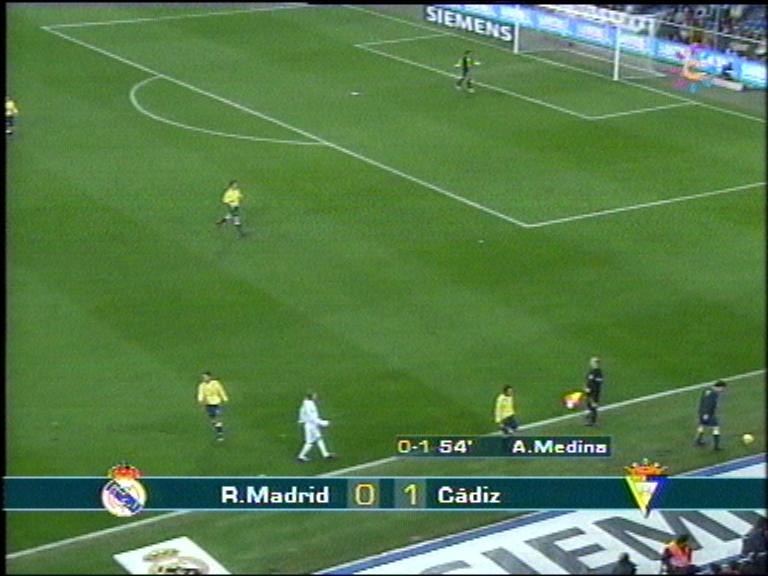
Hay que ver la que han dado todos los medios de comunicación con el partido Real Madrid - Cádiz, centrándose en los seguidores cadistas que han viajado hacia Madrid.
Los andaluces somos graciosos, vagos, juerguistas. Eso es lo que nos han querido mostrar. "Hemos venio a emborracharnos, el resultado nos da iguá" era el canto de guerra. E íbamos a Madrid a hacer gracia a los señoritos de allí.
Pero no sólo eran las televisiones nacionales (perdón, estatales), sino también nuestro Canal Sur:
"Los aficionados del Madrid callan y acogen con simpatía los cánticos de los del Cádiz"
Nuestra televisión fomentando el tópico: Andaluces graciosos van a Madrid a alegrar al personal de allí. No existe otro tipo de andaluz. Ese, o del del PER. El criado en la casa, los puestos más bajos, el bufón... y luego nos quejaremos. Pero esto es lo que hay. Imparables.
lunes, 2 de enero de 2006
Hasta 11 emisoras ilegales de PRISA en Andalucía
Lo acabo de leer aquí. Recientemente la cadena de radio Somosradio ha presentado un informe de defensa tras intentos de la Junta de Andalucía, gobierno regional, de suprimir algunas de sus emisoras que supuestamente emiten sin licencia. No entro en ese tema, pero Somosradio (¿no debería ser SomosrRadio?) ha contraatacado publicando las emisoras ilegales del grupo PRISA en Andalucía. Pasen y vean...
ALMERÍA
SER - Albox (103,3)
SER - Almería (88,3)
SER - Cañote (103,2)
40 Principales - Níjar (95.7)
CÁDIZ
Radiolé - Jerez de la Frontera (88,0)
CÓRDOBA
SER - Hinojosa del Duque (97,3)
GRANADA
M80 - Granada (103,8)
JAÉN
M80 - Jaén (93,5)
MÁLAGA
M80 - Malaga (101,1)
Radiolé - Málaga (93,8)
SEVILLA Máxima FM - Sevilla (96.5)
En este informe también aparecen irregularidades tales como el utilizar una frecuencia parecida a la asignada.
Departamento de Comunicación de Somosradio
Para mis lectores internacionales, el grupo PRISA es el mayor grupo mediático de España, tan próximo al Partido Socialista, gobernante también en esta región ininterrumpidamente desde la creación del gobierno autonómico, que a veces no se sabe si uno es el brazo político del otro o bien el segundo es el brazo mediático del primero. Favorecido por todos los gobiernos, incluso en la dictadura, tiene la mayoría de los postes emisores de radio, aparte de televisiones, periódicos, editoriales etc. Durante los días 11 al 14 de Marzo de 2004, infaustas fechas tras los atentados terroristas en Madrid, publicaron la existencia en los trenes de terroristas suicidas (algo que se ha demostrado falso) y llamaron a la movilización contra las sedes del PP en plena jornada de reflexión. Unas criaturitas, vamos...
ALMERÍA
SER - Albox (103,3)
SER - Almería (88,3)
SER - Cañote (103,2)
40 Principales - Níjar (95.7)
CÁDIZ
Radiolé - Jerez de la Frontera (88,0)
CÓRDOBA
SER - Hinojosa del Duque (97,3)
GRANADA
M80 - Granada (103,8)
JAÉN
M80 - Jaén (93,5)
MÁLAGA
M80 - Malaga (101,1)
Radiolé - Málaga (93,8)
SEVILLA
En este informe también aparecen irregularidades tales como el utilizar una frecuencia parecida a la asignada.
Departamento de Comunicación de Somosradio
Para mis lectores internacionales, el grupo PRISA es el mayor grupo mediático de España, tan próximo al Partido Socialista, gobernante también en esta región ininterrumpidamente desde la creación del gobierno autonómico, que a veces no se sabe si uno es el brazo político del otro o bien el segundo es el brazo mediático del primero. Favorecido por todos los gobiernos, incluso en la dictadura, tiene la mayoría de los postes emisores de radio, aparte de televisiones, periódicos, editoriales etc. Durante los días 11 al 14 de Marzo de 2004, infaustas fechas tras los atentados terroristas en Madrid, publicaron la existencia en los trenes de terroristas suicidas (algo que se ha demostrado falso) y llamaron a la movilización contra las sedes del PP en plena jornada de reflexión. Unas criaturitas, vamos...
Suscribirse a:
Entradas (Atom)


